
- Creating a winning talent strategy for your unique company needs
- How to separate hype from reality with upcoming technology to optimize recruitment
- Should your company adapt its talent strategy for Millenials
- How to train your multi-generational employees to be more engaged with your company’s culture
CEO Talent Summit
October 13 - 14, 2016
Co-hosted by Procter & Gamble
Cincinnati, Ohio
Drive your strategic HR advantage
Talent is a function that requires the CEO’s leadership and direction
This year's CEO Talent Summit gives you direct access to peers dealing with and solving the same talent challenges you face.
Learn how they implement everything from groundbreaking recruiting and retention strategies to world-class training programs and new technology to adapt to a changing workforce.
Strategies and solutions for your toughest talent challenges:
Featured Speakers
Agenda
Thursday, October 13th
11:00 to 12:00 PM |
Registration and Lunch
|
|
12:00 to 1:00 PM
|
The CEO’s Role in Creating a Winning Talent Strategy
A.G. Lafley / Former Chairman and CEO, Procter & Gamble
Consistently winning organizations—regardless of their industry, size or age—demonstrate three essential attributes: they are purpose-driven, performance-oriented and are principles-led. These attributes directly result from deliberate talent strategies that are consistently executed.
The CEO’s commitment toward a winning talent strategy must be complete: setting strategy and delegating is not sufficient. The CEO has a direct role to play day-to-day in each of the three domains. In fact, to build trust and be authentic, everything the CEO does must reinforce those three attributes. This session will cover the specific moves you as CEO need to make right now to rethink your critical role, develop competitive advantage and create a winning talent strategy. |
1:00 to 1:50 PM
|
How Digital Is Changing the Talent Equation
Cassandra Frangos / VP, Global Executive Talent and Organizational Design, Cisco
Carolyn Tastad / Group President North America, P&G
John Minor / President & Chief Investment Officer, JobsOhio
Sylvia Metayer / CEO Corporate Services Worldwide, Sodexo
As part of the rationale for moving its headquarters to Boston, GE cited the need to surround itself in a digital-friendly ecosystem surrounded by new talent and research. GE now sees its ability to compete digitally as a strategic imperative, helping to redefine the company itself. It is a shift that every company will need to make at one point or another.
This need to attract digital-savvy talent has enormous implications: given their non-digital legacies, most companies will struggle to attract the best and brightest digital talent. For those that successfully do recruit digital talent, there will be significant cultural conflict between digital and legacy talent (take your dog to work day, anyone?) Organizations must proactively manage this shift—and fast. This session will discuss the specific strategies to help your organization bridge the gap between old and new. |
2:10 PM to 3:30 PM
|
Roundtable Discussions
Identifying the Skills Needed in the Digital World
One of the common challenges most organizations have faced in the past is how technical teams and business teams speak different languages. In today’s digital age, this will prove to be a significant hurdle. The proliferation of digital tools and technologies across functions means that the business worker has to learn sufficient technical skills to work independently. At the same time, the technically adept need to bring everyone along and raise the bar for your organization. Is Your Organization and its Culture Adapting to New Ways of Developing Talent in the Digital World?
Ted Bililies, Ph.D. / Chief Talent Officer, Managing Director, AlixPartners
One of the biggest headaches for CEOs is making sure that the organization has the right people to cope with what lies ahead. There’s the basic question of planning for the skills that are needed now and in the future: Which roles will be automated? What new roles will be needed to manage and run emerging technology? What skills should the company be looking for, and training their people for? Where will we find the people we need? Perhaps more importantly, CEOs need to be sure that their business is fit to react quickly to whatever the future may throw at it—and that means filling it with adaptable, creative people, working in a culture where energy is created and ideas spark to life. If they can’t be found, they must be created. Whatever technological innovations are ahead, it’s the people that will make the difference between eventual success and failure. That’s why CEOs need a people strategy for the digital age. New Technology for a Digital Workforce
Interactions, task and work itself is undergoing a transformation as digital technologies allow information to be created, exchanged and processed differently. Simply, the workforce as we know it is evolving. Organizations that embrace the new ways of working by integrating new technologies are getting more things done and raising efficiency to a new level. Employees are becoming more virtual in the tasks as more data becomes available and the Internet of Things automate various processes. Increasingly there is no “right way of doing things” as people adapt to new technologies and become responsive to different ways of doing things. This roundtable will look at how digital tools are driving how people and organizations are changing the way they work.
The Future of Work is Here Today:
How Empathy, Teamwork and Purpose are Shaping the Business Landscape
George Brooks / Americas Leader, People Advisory Services, Ernst & Young LLP As they seek to identify, hire and train the next generation of leaders for the digital age, companies are faced with a host of transformative changes that are no longer on the horizon, but have already moved in, changing where, how, and why people work, innovate, engage, and produce. Employees want the same seamless digital experience at work that they get at home. They want their companies to be more involved in their overall health. They’re looking for purpose as a critical work experience. They’re expecting automation not to replace their jobs but to free them up for creative thinking and social interaction. How have companies adapted to these changes? How can you—how must you—adapt your company to meet these new demands? |
3:30 to 4:00 PM
|
The Results Only Work Environment
Greg Watt / President & CEO, WATT Global Media
In his search for ways in which to not only retain a young and talented workforce but also leverage what they’re able to bring to the organization, Greg Watt discovered ROWE, the Results Only Work Environment. Today his $12 million media company, focused on the agricultural industry, is finding it easier to recruit, engage, and retain workers who focus not on clock watching and “presenteeism” but on results. “We’ve put an emphasis on the right places,” Watt says, “aligning everything with a deep discipline, treating everyone equally, providing real flexibility, and allowing staff to get the job done.”
The results: stronger margins, consistent growth, and “the organizational results we’re going for.” Watt will discuss how this program has worked for WGM and the ways in which it can be scalable for larger businesses.
|
|
4:00 to 4:30 PM
|
How to Become a Superboss
Sydney Finkelstein
/ Professor, Tuck School of Business at Dartmouth College, and Author of Superbosses and Why Smart Executives Fail
What makes a good boss a “Superboss”? According to Syd Finkelstein, who has spent years studying the phenomenon through 250 interviews with executives in 18 different industries, many of the differentiators are what you’d expect: vision, collaboration, effective delegation. But that’s just the start. Much of what helps these Superbosses generate and regenerate talent, gain position in the marketplace, and create teams that are at once collaborative and competitive is counterintuitive. In this session, Professor Finkelstein, director of the Center for Leadership at Dartmouth’s Tuck School of Business, gives insight into the Superboss playbook, presenting a new way to think about talents, leadership, and leadership development. |
4:30 to 5:30 PM
|
Improving Employee Alignment and Engagement Across Generations
Moderator: Sydney Finkelstein
/ Professor, Tuck School of Business at Dartmouth College, and Author of Superbosses and Why Smart Executives Fail
Alan Masarek / Chief Executive Officer, Vonage Dr. Ilham Kadri / President, Sealed Air Corp Bruce Pfau, Ph.D. / Partner, KPMG
Sure, our health plans may have options for a variety of employee cohorts, but how many of our other HR initiatives serve multiple constituencies? We too often serve our employees as a single mass, rather than as distinct groups. As a result, employee alignment and engagement suffers.
The alternative is to segment and understand our employee populations as we do for customers. While millennials’ may thrive with more frequent feedback and involvement in charitable opportunities, for example, Generation Xers may value flex time or increased family wellness benefits.
In this session, we will explore the challenges of employee alignment and engagement for various cohorts and as employees move through different stages of their lifecycles. We will focus on practical initiatives that you can adopt to address the needs of your diverse employee population.
|
|
5:30 PM
|
Adjourn. Board buses and embark to the hotel to refresh. |
6:15 PM
|
Bus leaves Hotel for Cocktails and Dinner
|
|
6:30 to 9:30 PM
|
Cocktails and Dinner on Riverboat
|
9:30 PM
|
Buses Return to Conference Hotel |
Friday, October 14th
|
7:30 to 8:15 AM
|
Breakfast |
|
8:20 to 8:30 AM
|
This Ain't Your Father's Workforce
Alan Guarino / Vice Chairman, Korn Ferry
"If only my people were better." "There's too much noise bubbling up to my level." "We need to execute faster and better." These are common phrases heard among CEOs today. Leading a workforce that includes both Millennials and Baby Boomers and having to deliver quickly in a more and more complex environment is a massive challenge. Learn how you can face the challenge with a culture that drives people to achieve. The key: three components—one of which begins and ends with you.
|
8:30 to 9:30 AM
|
Creating and Sustaining Competitive Advantage Through Inclusion and Engagement David Taylor / CEO, Chairman & President, Procter & Gamble
The biggest investment any company makes is not its machinery, technology or any other physical asset—it is in its people. People are a company’s most important asset, and one of the biggest challenges CEOs face is making sure that their company’s people are performing at their peak every day. This requires that the CEO devote significant time ensuring that his or her company not only has the right mix of talent, but that the talent works well together and is fully engaged in the work of the organization. This session will explore the role the CEO and his or her leadership team plays in creating the conditions for a company to get the full value of all its people. |
9:30 to 10:30 AM
|
P&G’s Proven Model for Developing Talent
Mark Biegger / Chief Human Resource Officer, Procter & Gamble Laura Mattimore / VP of Global Talent, Procter & Gamble In this session, P&G will share their proven model for developing talent. P&G sees leadership development as a long-term business strategy and grows talent with the same creativity and discipline used in every other part of the business. In fact, the talent pipeline is as important as the innovation pipeline…leaders are created in the same way as superior products: with insight, innovation and rigor. |
10:40 to 11:30 AM
|
Solutions Exchanges
Finding the Talent to Win: Improving Recruiting Outcomes
The Real Reason Star Employees Quit (and How to Keep Them)
Making the Right Investments in People
|
11:30 AM to 12:30 PM
|
You've Got the Talent. How Do You Get Them to Innovate?
Michael Arena
/
Global Talent & Development, General Motors Corp.
No industry is safe from disruption by a scrappy startup with brand new innovation. Even when great ideas happen at legacy companies, smaller, nimbler players can outpace them in the race to market because their internal structures are less hierarchical and built on meritocracy. Successful innovation, says Michael Arena, is the result of the right people connecting at the right time, and then others buying into and championing the new idea. “The social dynamics matter as much as the idea itself,” he says. In this session, which builds on Arena’s discussion of the people dynamics involved in culture shift at last year’s CEO Talent Summit, he’ll examine the three roles that are critical for innovation to take place at larger, legacy companies: Brokers, who introduce new ideas;Connectors, who get those ideas implemented, getting buy-in from local groups inside the organization because they excel at engendering trust; and Energizers, who spark the interest of others across the organization and unleash the passion necessary for those innovations to advance
For CEOs, Arena will explain, the focus must be on talent development and on making sure all three roles are represented well inside the company, creating an environment in which people feel comfortable experimenting. |
*Agenda subject to change
Featured Sponsors

Event Venues
 |
Procter & Gamble
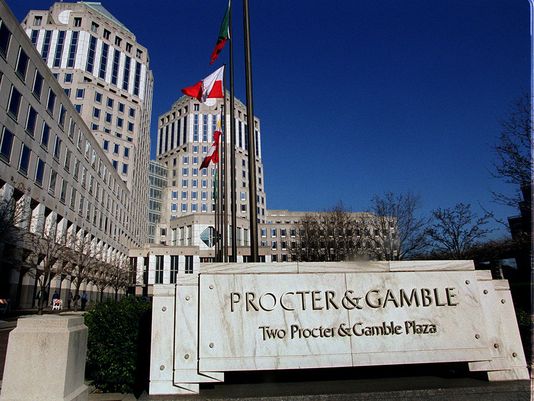
The Procter & Gamble Company (P&G) was named the "Best Company for Leaders" three years in a row by Chief Executive magazine. P&G is noted for placing a premium on developing people from within, judging senior managers on their ability to develop those who report to them, and a development program that includes formal and informal training. The P&G approach provides a breadth, depth and diversity of experience that is hard to match across any industry. The average P&G President has nearly three decades of experience across multiple businesses, functions and regions. Most of the Talent Summit sessions will take place at Procter & Gamble corporate headquarters. |
 |
Renaissance Cincinnati Downtown Hotel
36 East Fourth Street Cincinnati, OH 45202 Call in # for Reservations: 800-228-9290 mention Chief Executive Talent Summit Room Block. Room rate: $199.95 per night Local Airport: Cincinnati/Northern Kentucky International Airport (CVG) Approximately 14 miles Transportation from airport to hotel: Taxicab: Approximately $34 one-way Van & Car Service: Approximately $24 one-way, $36 round-trip (Call 859-261-8841 or online here) Lyft and Uber available |
Contact Us
Have a question about the event? Please feel free to contact us.