
City Hall - 1400 John F Kennedy Blvd
Dewey’s Sit-in Plaque - Corner of 17th St and St James St
Gloria Casarez Mural - 204 S 12th St
The Gayborhood - 10th to Broad & Spruce to Walnut
History of Chinatown Mural - 245 N 10th St
Historical Society of Pennsylvania - 1300 Locust St
Independence Hall - 520 Chestnut St
Legacy Mural - 707 Chestnut St
Magic Gardens - 1020 South St
Mother Bethel AME Church - 419 S 6th St
Peace is a Haiku Mural - 1307 Locust St
Philadelphia Tribune - 520 S 16th St
Reading Terminal Market - 51 N 12th St
- Octavius Catto Statue - Octavius Catto, a civil rights leader and educator, was murdered while on his way to vote. This is the first monument to a single African-American within Philadelphia and was erected in 2017. Read more here.
- Frank Rizzo Statue - Frank Rizzo, a white former police chief and mayor of Philadelphia, was memorialized here in 1999. Frank Rizzo used his positional power to target black residents of Philadelphia during his tenure as a public official. Read more here. The statues of the two men are across the street from one another.
- Portraits of Justice Mural - While you’re at City Hall, look at the large mural contained within the entrance (look behind the Rizzo statue). This mural was painted by several artists who were formerly incarcerated and depicts formerly incarcerated individuals.
Missing Voices
As you begin your tour, listen to one of these brief stories recorded by Lenape language experts. The Lenape language has its roots in two other languages; Unami and Munsee. The first speakers of these languages were also the first recorded inhabitants of this land; most of these people are members of the modern Delaware tribes, living in Oklahoma. The Lenape language is preserved in stories, songs, and other works of art through a collaboration with the National Science Foundation. Unami- and Munsee-speaking peoples have a complex history of removal but a thorough explanation can be found here.
Walking Tour Overview
Systems Change
We think of systems change as changes in policies and practices in and across institutions and systems. So, what does this look like in a community? Today your LEAD journey will take you to several different murals and public spaces. Each of these murals or buildings in Philadelphia represents a moment when a group of people challenged an oppressive system. From the statue of Octavius Catto, a noted civil rights activist, to the Mother Bethel AME Church, each of these sites is an important part of the fabric of Philadelphia. Choose from the stops to the right and dig deep into the reflection questions in this walking tour guide.
Featured Stops
Emergency Contact
While we sincerely hope that no emergencies happen on your walking tour today, should you encounter any issues or lose your way, please immediately call or text April Schattner at (715) 891-1375.
Suggested Routes
Two suggested routes are provided for you below. Feel free to add or remove a stop, but make sure your group concludes the walk at Reading Terminal Market for lunch.
Suggested Route 1 - About 1 mile
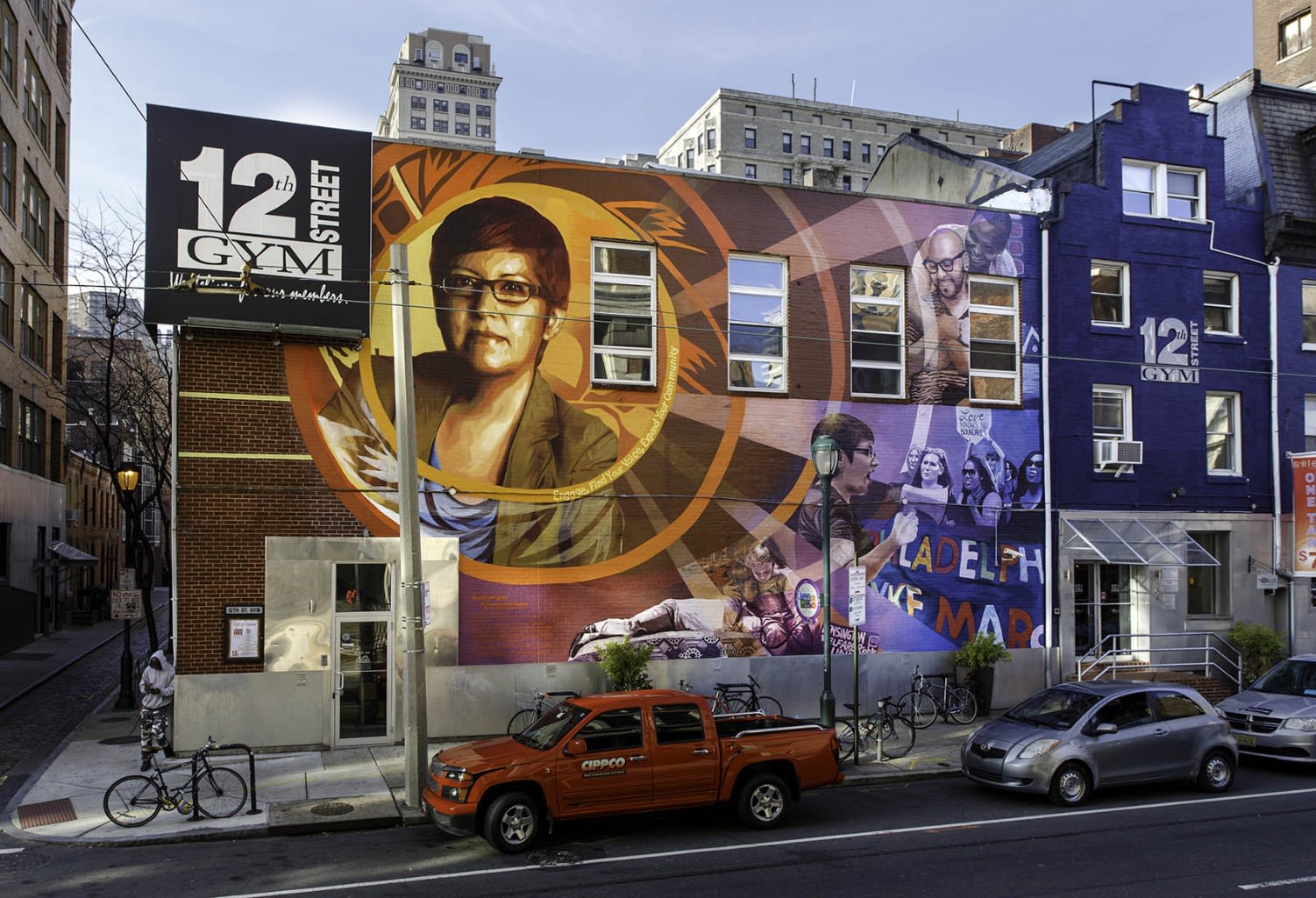
Tribute to Gloria Casarez - 204 S 12th St
Gloria was a noted Philadelphia civil rights activist. She particularly focused on issues impacting LGBTQ+ folks, especially transgender people of color, LGBTQ+ people experiencing housing insecurity, and HIV+ folks.
Gloria was the first director of LGBT affairs for the city of Philadelphia and was a founding member of the Philly Dyke March. Through her influence, Philadelphia adopted some of the strongest protections for LGBTQ+ people in the country. Read more about her influence on Philadelphia here.
Discuss with your group: What tools did Gloria and other activists use to dismantle some of the oppressive systems in Philadelphia? Which tools and resources might be most relevant for your future classroom?
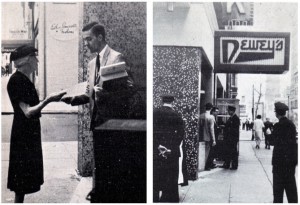
Dewey’s Sit In Plaque - Corner of 17th St and St James St
In Spring 1965, Dewey’s management directed staff to refuse service to a group of gender nonconforming teenagers. The staff then began refusing service to anyone who appeared to be a member of the LGBTQ+ community.
LGBTQ+ community leaders began protesting and distributing flyers outside Dewey’s. Organizers from the protests also held a series of annual pickets called “The Annual Reminders”. These pickets took place at The Liberty Bell on July 4th from 1965-1970. Read more about the Sit In here.
Discuss with your group: Discuss the role that this particular event plays in the larger movement for LGBTQ+ rights in the country. What does it make you wonder or want to know more about?
City Hall - 1400 John F Kennedy Blvd
Discuss with your group: How do the statues of these two men represent examples of systems OR systems change in Philadelphia? What narratives about Philadelphia emerge from the history of these two statues and the placement of this mural?
Suggested Route 2 - 4.1 miles
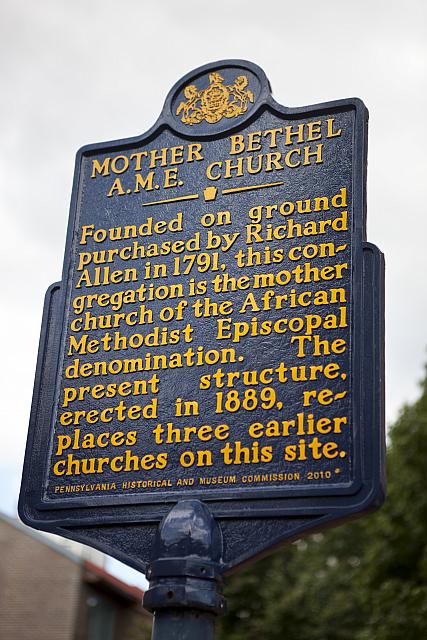
Mother Bethel AME Church - 419 S 6th St
This is the oldest piece of property in the United States that has been continuously owned by African Americans. This church (and subsequent denomination) was organized by Methodists who walked out of local churches after experiencing racial segregation in worship services.
Check out more of the history here.
Discuss with your group: How do you think a “broad and diverse coalition, united by shared purpose and values” helped achieve this systems change? How might having a place to congregate as a marginalized group influence the amount of power you feel?
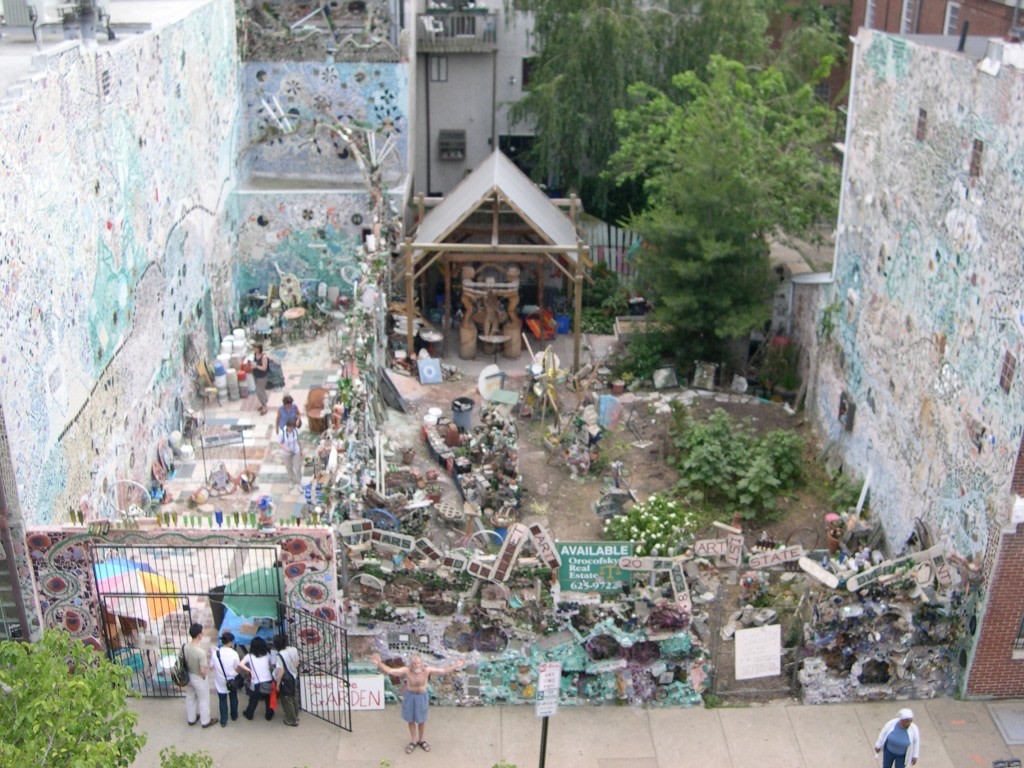
Philadelphia’s Magic Gardens - 1020 South St
Isaiah Zagar has created mosaic art and renovated abandoned buildings in Philadelphia since the late 1960s. His goal is to draw attention and interest to abandoned urban spaces in the South Street neighborhood.
Zagar began construction on the Magic Gardens, a formerly vacant lot, in 1994. They are a work in progress and Zagar continues to add to them regularly.
Discuss with your group: How can public art installations influence what kinds of spaces we value?
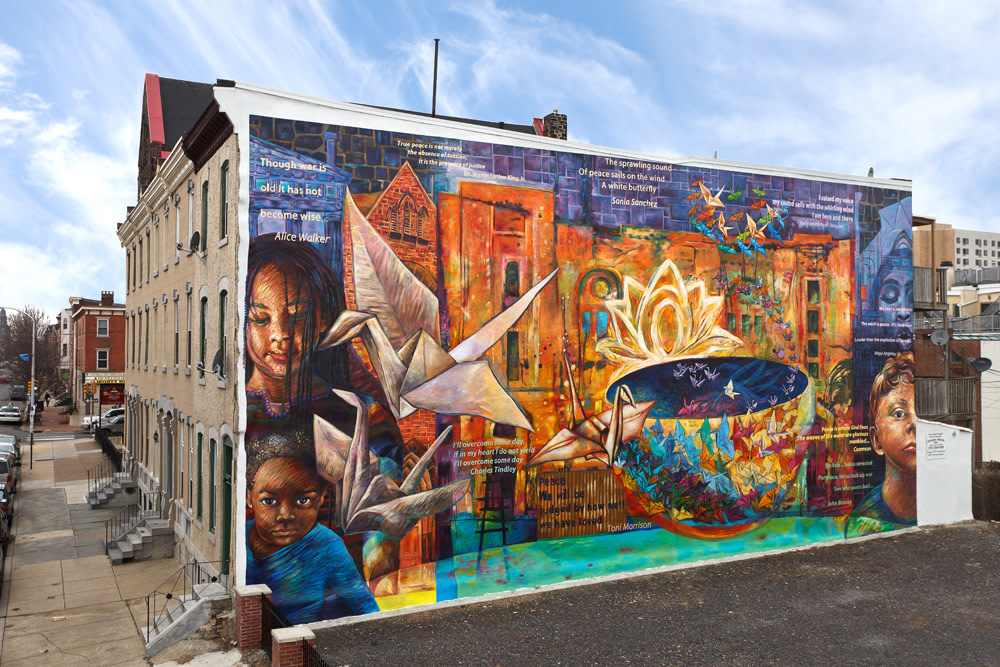
Peace is a Haiku Song Mural - 1307 Locust St
Sonia Sanchez is an activist and former Poet Laureate of Philadelphia. Using community input, her own poetry, and the words of other black women authors, this mural highlights the importance of black women as creators and peacemakers.
This is one of nine murals centering the lived experiences of women in Philadelphia. Check out this list for more information.
Discuss with your group: In what ways can art and peace-centered resistance create systems change?
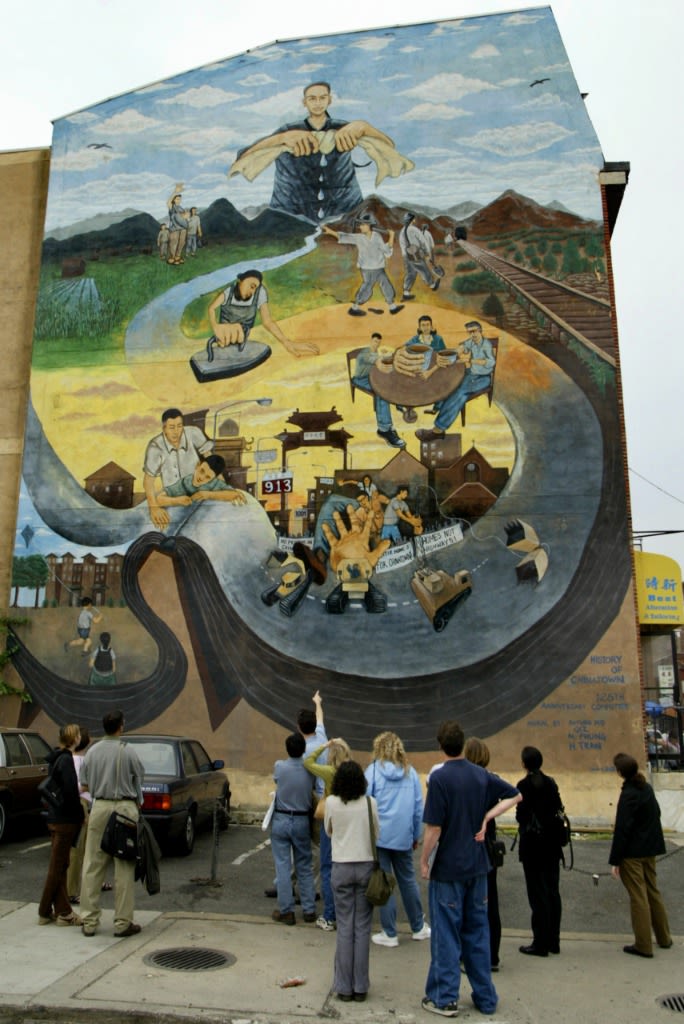
History of Chinatown Mural - 245 N 10th St
This mural is part of a series by several by AAPI artists who are reclaiming public space to tell the stories of AAPI communities in Philadelphia.
This mural depicts some of the history of Chinatown. At the top, a laundry worker’s drops of water transform into a highway. In the 1960s and 1970s, much of Chinatown was seized through eminent domain for the construction of a highway and other city projects.
Discuss with your group: What does the demolition of community spaces/neighborhoods suggest about systemic oppression and silencing of specific voices in Philadelphia? How does the reclaiming of this space illustrate the Vision sub-practice of TOL?
Additional Stops
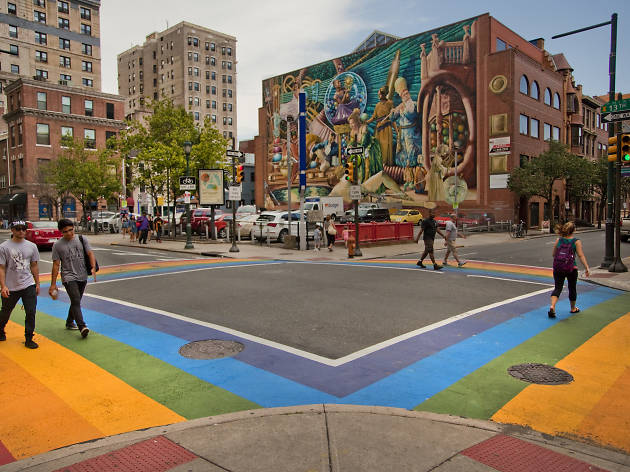
The Gayborhood - 10th to Broad & Spruce to Walnut
Welcome to the Gayborhood - Philadelphia’s LGBTQ+ neighborhood. The Gayborhood is thought to be the oldest LGBTQ+ neighborhood in the country, and possibly the origin of the term “gayborhood” that has now been applied to many other neighborhoods throughout the US.
Many of the street signs and streets throughout the Gayborhood are decorated with rainbows - from rainbow crosswalks to stripes on the bottom of street signs, LGBTQ+ spaces are recognized and celebrated here.
Discuss with your group: After exploring Dewey’s Sit In and the Tribute to Gloria Casarez, what influence do you think these events had on the formation of the Gayborhood?
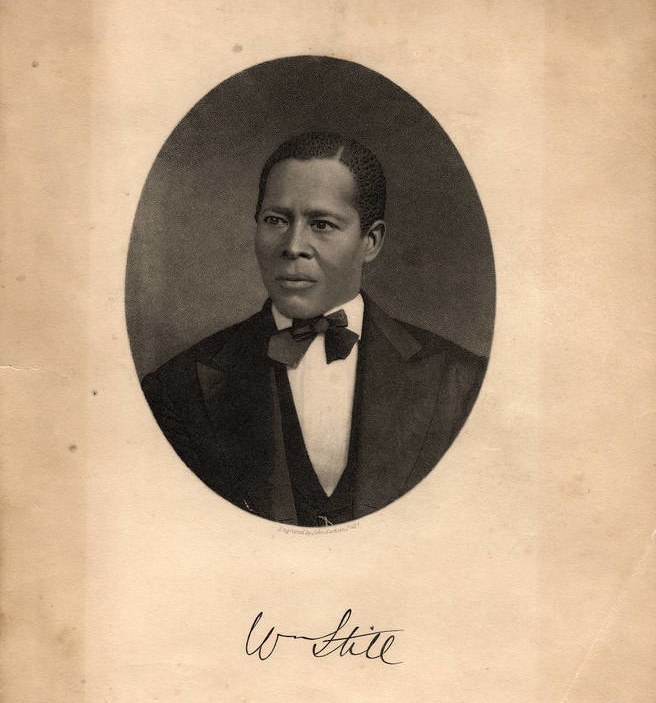
Historical Society of Pennsylvania - 1300 Locust St
The Historical Society of Pennsylvania is home to many historical documents. Their collections include a physical and digital archive of the organizing documents of the Pennsylvania Abolition Society.
In addition to the PAS papers, the society houses a collection of the writings of William Still, an abolitionist and the author of The Underground Railroad. His book is one of the most comprehensive records of narratives by and about formerly enslaved individuals.
Discuss with your group: How can historical preservation shape a society’s understanding of its past? Imagine teaching the importance of this place to a group of middle school students - what would you want them to take away from a visit here? How might you explain the connections between studying the past and their lives in the present?
Independence Hall - 520 Chestnut St
Independence Hall is the site where many of the foundational government documents of the United States were drafted and debated.
Discuss with your group: American leaders assert almost universally that the words of the Declaration of Independence, “all men are created equal,” have been a consistent guiding principle in American life and law. Do you agree?
How might TFA’s idea of “sustained leadership...inside and outside of the education system challenging conventional beliefs and ways of operating by demonstrating what’s possible” connect to this place?
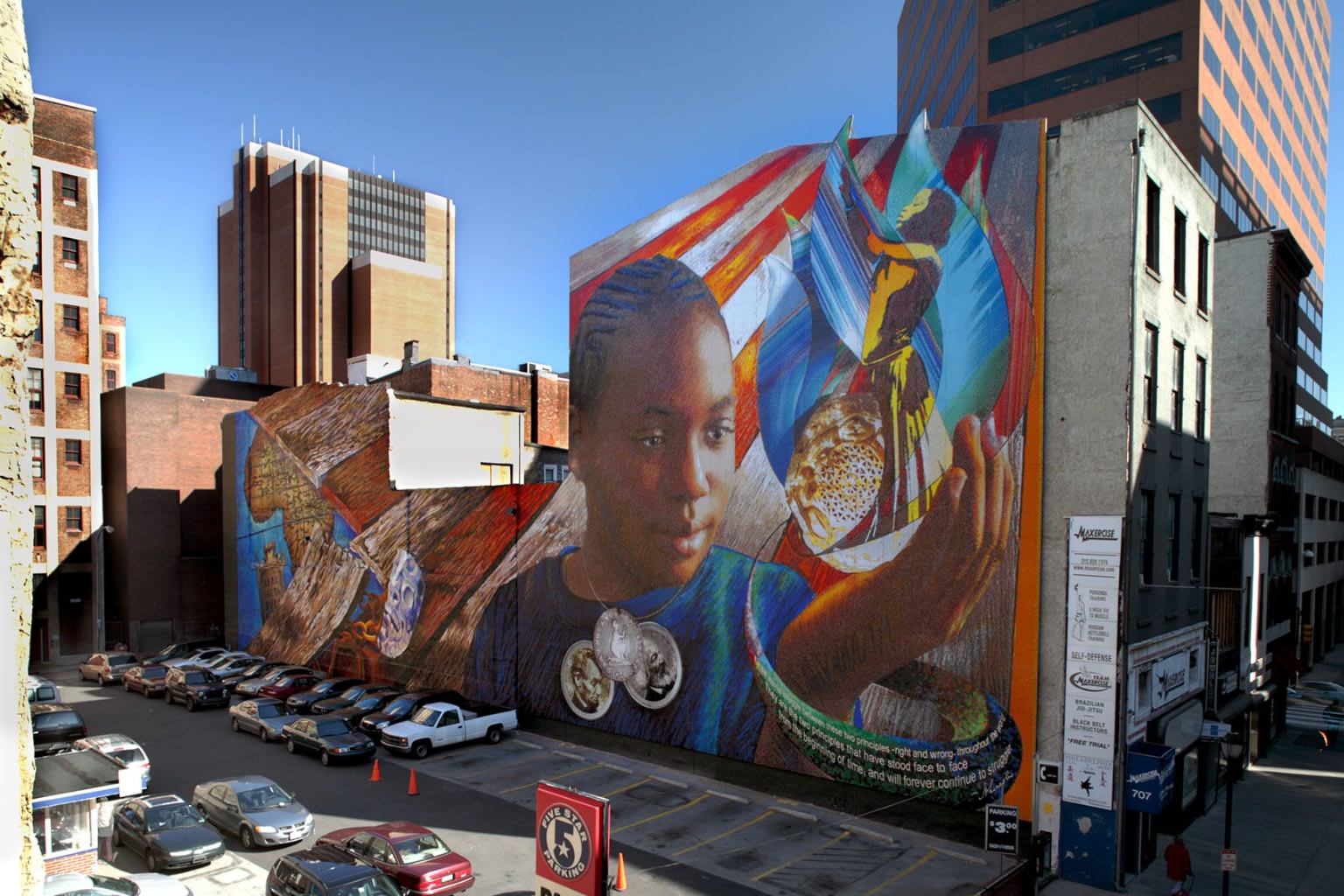
Legacy Mural - 707 Chestnut St
This massive mural contains over 1 Million hand-laid glass tiles. Students from 5 public schools contributed volunteer time to construct this mural alongside several artists. The mural traces the impact and legacy of chattel slavery on the United States and is read from Left to Right.
Discuss with your group: What role can education play in breaking down oppressive systems? Why is systemic change is necessary to reach educational equity?
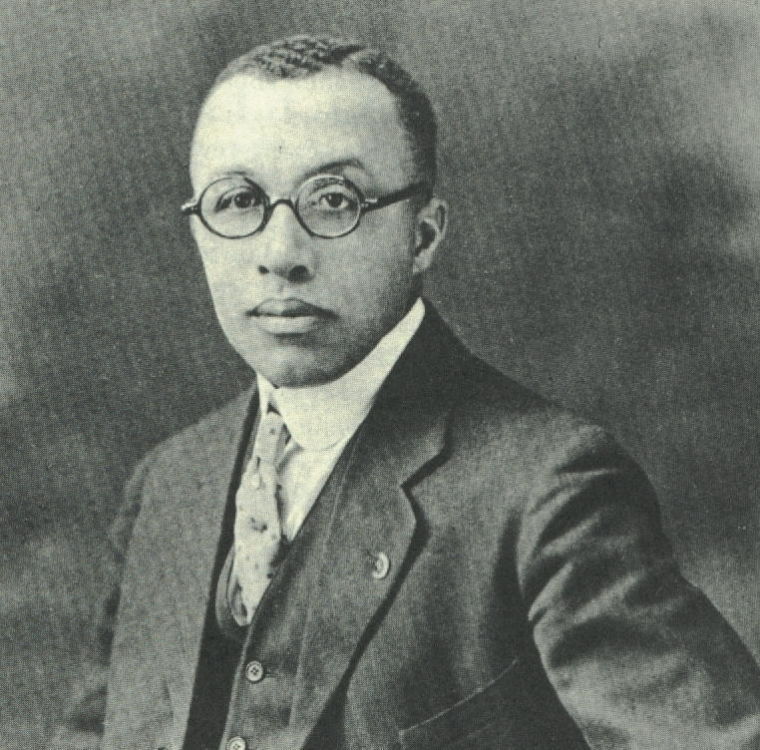
Philadelphia Tribune - 520 S 16th St
The Philadelphia Tribune newspaper is the oldest continuously-published newspaper by and for African Americans in the United States.
The newspaper was first published in 1884 by Christopher James Perry, Sr. and today has a readership of about 600,000.
Discuss with your group: Much like Mother Bethel AME Church, the Philadelphia Tribune provided a space designed exclusively for African Americans in Philadelphia. What is the importance of spaces and experiences such as these? How might having a news source from within a community shape the stories that are told about a community?
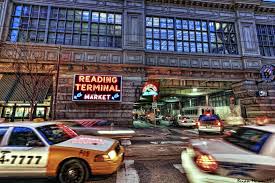
Reading Terminal Market - 51 N 12th St
As one of the oldest public markets in the United States, Reading Terminal Market provides numerous choices for your lunch today!
Check out the options for lunch here and take some time to enjoy the sights, sounds, and smells of this bustling and vibrant market.