
2021 SHORTLIST
SHORTLISTED NOMINEES

KOKO bioethanol cooking fuel ATM network - Kenya
Most homes in sub-Saharan Africa rely on charcoal for cooking. KOKO Networks’ solution reduces carbon emissions while protecting Africa's forests. KOKO's low-cost two-burner stove runs on liquid bioethanol, a by-product of the local sugar industry. In local shops, 700 KOKO ATMs dispense fuel through cashless transactions into ‘Smart Canisters’ that come with the stove. This zero-emissions solution is 50% cheaper than charcoal. 230,000 Nairobi households have switched to cooking with KOKO since late 2019, saving 5 tonnes of CO2 emissions per household per year. By 2025, KOKO expects to serve 2 million households.

Reall green-certified affordable homes - Nigeria, Uganda, Kenya, India, Pakistan
1.2 billion people globally are without adequate affordable housing options. At the same time, the world is facing a climate crisis. Tackling both of these issues, Reall has developed affordable, green-certified homes that mitigate carbon emissions and have embedded sustainable resilience. Reall also has an innovative financing model under which it invests in partners to deliver the construction of homes, and re-invests returns and surplus profit into further building. 1,800 climate-smart homes were completed in 2019 and 2020, and a further 6,000 are currently under construction. Their energy-efficient design and low-carbon construction can ultimately avoid up to 60 tonnes of CO2 emissions per home.

SDCL energy efficiency investment fund - UK, Europe, US
Energy production is one of the largest contributors to climate change, yet up to two thirds of energy is lost in transmission, generation and distribution. SDCL Energy Efficiency Income Trust (SEEIT), managed by Sustainable Development Capital LLP, is the first UK-listed fund to invest exclusively in the energy efficiency sector, supporting proven and intelligent solutions that have so far reduced greenhouse gas emissions and improved the efficiency of energy supply in 55,000 properties across the UK, Europe and US. In the year to March 2021, SEEIT’s portfolio saved 655,000 tonnes of CO2, generated 895,000 MWh of renewable energy, and delivered 4 million MW of demand-side energy reduction capacity.

Standard Chartered financing to decarbonise buildings - Global
The real estate sector will require a large amount of funding and support to hit net zero. Standard Chartered is playing its part by helping clients decarbonise both new and existing buildings. It is providing $40 billion of financing by the end of 2024 for infrastructure that promotes sustainable development, and closed 25 green financing transactions for commercial real estate clients in the first six months of 2021, including 12 green and sustainable bond issuances in Asia Pacific. Standard Chartered also provides free technical assistance to developers, real estate investors and fund managers to convert existing buildings, new developments and real estate portfolios to green and EDGE-certified.;
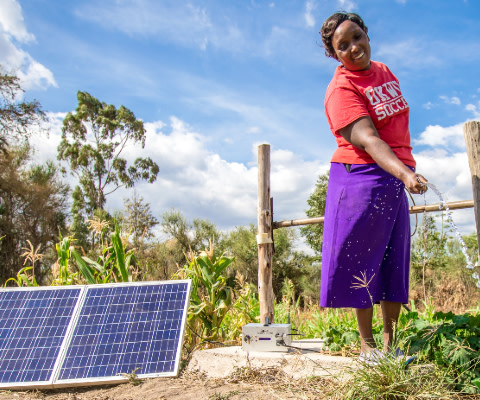
SunCulture solar-powered water pump and irrigation solutions - Kenya, Uganda, Ethiopia, Togo, Côte d'Ivoire, Senegal, Zambia
Water is a precious resource in Africa, with 96% of smallholder farmers relying on rain to meet their agricultural needs. The problem is exacerbated by climate change, and smallholder farmers are now Africa’s biggest demographic living in poverty. SunCulture is working to change this by offering an IoT-enabled, solar-powered water pump and irrigation system that is available on a Pay-As-You-Grow financing plan. Its Rainmaker2 technology makes irrigation simpler and cheaper, while increasing yields and reducing water usage by 80%. SunCulture has sold tens of thousands of pumps to farmers across sub-Saharan Africa. In a recent survey, 81% of customers in Kenya alone said their revenues had increased as a result.
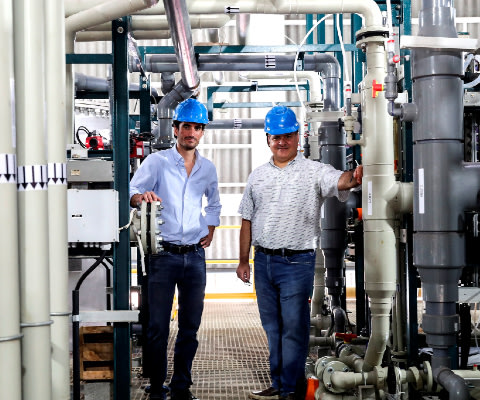
Chlorum Solutions small-scale chlor-alkali manufacturing plants - Brazil, Uruguay
Chlor-alkali production is traditionally concentrated in very large plants that are part of even bigger complexes located in coastal areas. However, the demand for chlorine byproducts is spread across geographies, meaning that the industry generates massive economic and environmental inefficiencies. Chlorum’s solution is the construction of modular, environmentally friendly plants that solely produce chlor-alkali, are up to 100 times smaller than standard plants, and are located near pockets of industrial demand. Chlorum currently has one plant in Uruguay and two in Brazil, where it is building three more. They are designed to work within a circular economy model, with all waste recycled by 2025.

Gemcorp grassroots waste reclaimer initiative with traceability - India
The Gemcorp project aims to aid the transition to a circular economy in India by improving the working and living conditions of reclaimers, who go through plastic waste to find recyclable or reusable materials. It is currently working with 1,000 families of reclaimers in the informal sector in Mumbai, providing training, wages and social security. Free of charge baling machines have been installed at collection centres, along with access to clean drinking water and regular medical camps, to make the waste-picking process easier and safer. A mobile-based app connects reclaimers and provides traceability of the waste collected.

LeapFrog Investments - Asia, Africa
LeapFrog invests in high-growth healthcare and financial services companies that provide products and services to low-income consumers across Africa and Asia. Companies LeapFrog has helped build include Goodlife, the largest healthcare provider in East Africa; ARM Pensions, the largest independent pension provider in Nigeria, and BIMA, the largest mobile micro-insurer in the world. LeapFrog companies reach 221 million people across 35 countries, growing on average 26% a year and generating over $2 billion in annual revenue. In the past year alone, they have paid out $533 million in insurance claims and $289 million in pensions to low-income people, disbursed $16.4 billion in loans and provided 23 million high quality pharmaceutical products.

Chartered Banker Institute Certificate in Climate Risk - Global
The Certificate in Climate Risk, developed by the Chartered Banker Institute, the Chartered Insurance Institute and the Chartered Institute for Securities & Investment, is an initiative designed to galvanise positive action on climate change amongst financial services professionals. The aim is to develop the expertise required to manage climate risks and identify the challenges and opportunities from the transition to net zero. Professionals who complete the certificate will be able to outline and examine approaches in measuring, monitoring, modelling and reporting climate risks, including the use of scenario analysis, and apply these skills to support their clients, colleagues and communities.
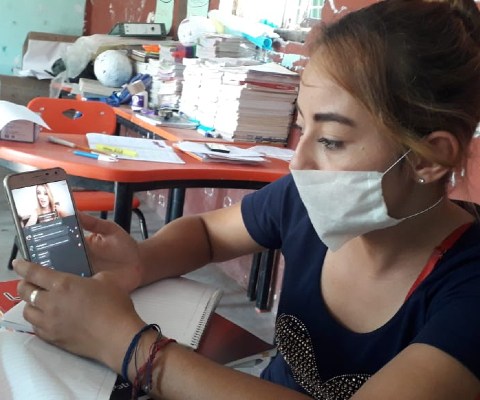
Red Magisterial-Google online teacher education programme - Mexico, Argentina, Peru, Colombia, Chile, Bolivia, Ecuador
Mexico was completely unprepared for distance learning when the government shut down schools across the country in April 2020 due to the pandemic. There were no official ed-tech tools, no digital content, and a lack of the skills necessary to make distance learning successful. In partnership with Google for Education and with the approval of the Ministry of Education, Red Magisterial moved quickly to deliver educational internet domains for every Mexican state, Google Workspace accounts for all school leaders, teachers and students, curricular coursework content and digital training for teachers. To date, 16,200 teachers have signed up to participate and the webinar training email list has 66,400 subscriptions, with registered viewers not just in Mexico but also in other Spanish-speaking countries.
Transformational Finance Solutions – Impact Investing

Bamboo Financial Inclusion Fund II - Africa, Asia, Latin America
Despite the rapid development of mobile technologies that have increased access to financial services in low income communities, many people in developing communities still remain underserved, particularly in rural areas. Bamboo Capital Partners’ latest Financial Inclusion Fund invests in companies that improve access to financial services for low to middle-income populations in Africa, Asia and Latin America, with a focus on tech-enabled solutions that have impact at scale. As of 2020, the fund’s investee companies had provided financial services to 3.8 million people, mainly women, and had supported 7,920 jobs, including 1,128 jobs for women.
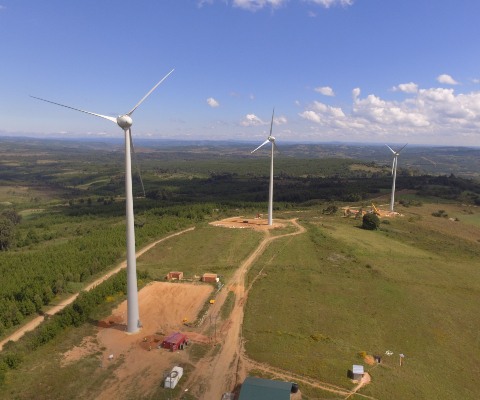
Camco-managed Renewable Energy Performance Platform (REPP) - Sub-Saharan Africa
The Renewable Energy Performance Platform (REPP) – managed by Camco Clean Energy -- aims to create a self-sustaining market for investment in small-scale renewable energy in Sub-Saharan Africa. REPP ensures risk-adjusted returns by creating a high volume of projects and adapting recognisable financing mechanisms to unfamiliar country and asset class contexts. Its innovative design allows it to take higher risks than other climate funds, enabling investment in innovative forms of energy in countries traditionally seen as unrewarding. To date, REPP has created 31 high-risk deals, crowded $113 million of private investment into de-risked projects, reduced CO2 emissions by 32,000 tonnes, and provided electricity to 700,000 people across 16 countries.

IMPACT Affordable Housing Preservation Strategy - USA
Under current federal programmes, it will take almost 70 years to address the shortage of 7 million homes for extremely low income renter households across the US. There is also the potential loss of 300,000 affordable homes over the next four years due to the expiry of rent control restrictions. IMPACT Community Capital’s Preservation Strategy offers institutional investors the opportunity to preserve affordable housing by investing at scale in short-term mortgage loans that provide developers the time to secure permanent federal financing. The Strategy expects to preserve 5,000 affordable housing units over the next five years, while providing stable yields to investors.
UOB Venture Management-Credit Suisse Asia Impact Investment Fund - Southeast Asia, China
The Asia Impact Investment Fund (AIIF) addresses entrenched social challenges in Southeast Asia and China by driving equity investment into inclusive businesses that generate a positive impact at the base of the pyramid by offering commercially scalable and often innovative solutions to improve livelihoods and well-being. AIIF’s portfolio companies have facilitated access to finance for 680,000 low income individuals, access to affordable healthcare and nutrition for more than 2 million people, and access to quality education for 13 million youths from poorer households. They have also reached more than 80,000 farmers in China and Southeast Asia with access to finance and solutions that improve farming yields.
Transformational Finance Solutions – Gender-lens Finance

Banco Pichincha banking services for underserved women – Ecuador
57% of women in Ecuador do not have a bank account and therefore have no access to savings or credit facilities. To address this, Banco Pichincha has designed a set of services aimed at hitherto unbanked women. They include streamlined access to credit with preferential conditions, savings accounts, a debit card, personalised advice, and financial education opportunities to ensure long-term change. Through these services, as of August 2021, Banco Pichincha had disbursed more than $1 billion to 216,00 female micro and SME entrepreneurs, and set up more than 313,000 savings accounts.

Bank of Ayudhya bond to finance female-led SMEs – Thailand
SMEs are a vital engine of economic growth in Thailand, where they generate around 12 million jobs. Access to finance however remains a major challenge, particularly for female entrepreneurs. To address this, Bank of Ayudhya in 2019 became the first private sector entity in Asia Pacific to issue bonds specifically targeted to women. The proceeds of the 6.64 billion baht Krungsri Women SME Bond specifically finance projects that benefit the employment through female-led SMEs or benefit the socioeconomic advancement of low-income or disadvantaged women. Financing from the bonds has helped create over 37,000 jobs as of 2020 via SMEs or micro-SMEs led by women.

BRAC Bank’s TARA women banking services – Bangladesh
Around 64% of the 81 million adult women in Bangladesh do not have a bank account. To boost female empowerment and enhance financial inclusion, BRAC Bank launched TARA, the first women-focused suite of banking services in Bangladesh. It includes savings accounts with a higher than average interest rate, current accounts for women entrepreneurs, savings solutions, business and retail loans with preferential rates, discounted processing fees, and dedicated customer services. TARA has so far provided $60 million in financing for female-led businesses, credit card services to over 16,000 women, and more than 150,000 accounts that hold almost $450 million in savings. TARA also includes training programmes, workshops, radio shows, webinars and social media content.

EcoEnterprises gender-smart venture fund for nature (EcoEnterprises Fund III) - Latin America
The initial EcoEnterprises Fund in 1998 was the first female-owned and led impact fund. Its third fund builds on its successful approach of focusing on women-led solutions to nature conservation and biodiversity challenges, working directly with investee companies in underprivileged communities in the Amazon and other areas of Latin America, in sectors such as regenerative agriculture, alternative forest products, circular economy and other emerging opportunities. The fund, invested by 33 private and institutional shareholders, has already provided nearly $60 million in capital, which has been committed by EcoEntreprises under the 2X Challenge, a broad initiative launched by DFIs in the G7 countries to raise billions of dollars for gender-lens investment.

Itaú programme for women entrepreneurs in marginalised communities - Brazil
While 50% of initial stage entrepreneurs in Brazil are women, they are still a minority among entrepreneurs running companies over 3.5 years old. This disparity has been accentuated by the pandemic, which has disproportionately affected female entrepreneurs, particularly in marginalised communities where most of the population is indigenous or Afro-descendant. To address this, Itaú Unibanco has adapted its successful Women Entrepreneurs Programme to focus on empowering women and strengthen their businesses in these communities specifically. The programme offers training, mentoring and market-connection tools to women-led micro-businesses, as well as an acceleration programme that provides seed capital with a focus on business digitalisation.