
Brainsight Breakthroughs: Neuroplex - Linking Neuronal Identity and Activity in Freely Behaving Animals
July 14, 2026
11:00 AM EST / 08:00 AM PST
WE ARE LIVE IN
About the webinar
Head-mounted miniscopes have made it possible to record calcium activity from neurons while animals move freely and engage in natural behaviors. However, most miniscope experiments are limited to one or two fluorescent channels, making it difficult to determine how multiple defined neuronal populations contribute to behavior within the same animal. Here, we describe Neuroplex, a workflow that combines miniscope calcium recordings with in vivo multiplexed confocal spectral imaging through the same GRIN lens. After functional imaging, neurons are matched to fluorophore-specific spectral fingerprints and classified using linear unmixing, allowing up to nine projection-defined neuronal populations to be distinguished in the same field of view. This approach links neuronal activity, projection identity, and behavior in single animals, expanding the types of circuit questions that can be addressed with miniscope imaging.
About Mary Phillips, PhD
Dr. Mary Phillips is a neuroscientist and Business Development Manager for Neuroscience at ZEISS Research Microscopy Solutions. Her research has focused on neural circuits, behavior, and advanced imaging approaches for studying neuronal activity in freely behaving animals. During her postdoctoral work in Ryohei Yasuda’s lab at the Max Planck Florida Institute for Neuroscience, she developed Neuroplex, a multiplexed imaging workflow that combines miniscope calcium recordings with in vivo spectral confocal imaging to link neuronal activity with projection-defined cell identity. At ZEISS, Mary works with the neuroscience community to support advanced imaging workflows, collaborations, and application development.
More to explore
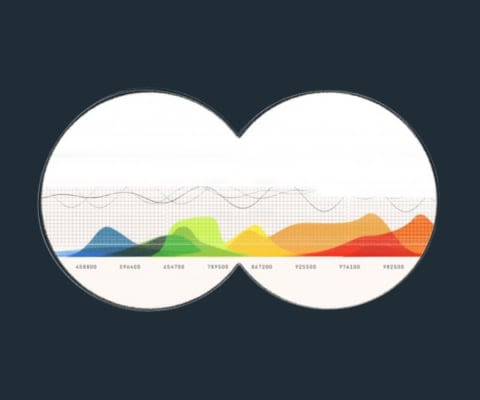
Understand how multiplexed spectral imaging, image registration, and linear unmixing can distinguish up to nine neuronal populations through the same GRIN lens.
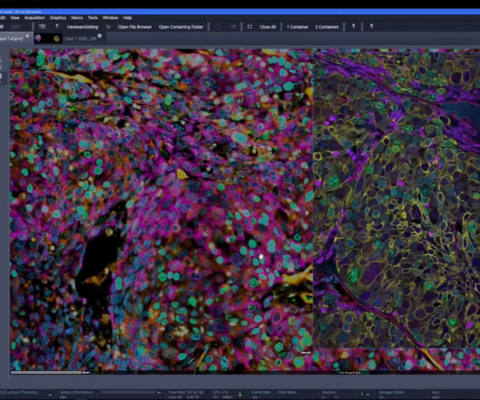
Understand how multiplexed spectral imaging, image registration, and linear unmixing can distinguish up to nine neuronal populations through the same GRIN lens.
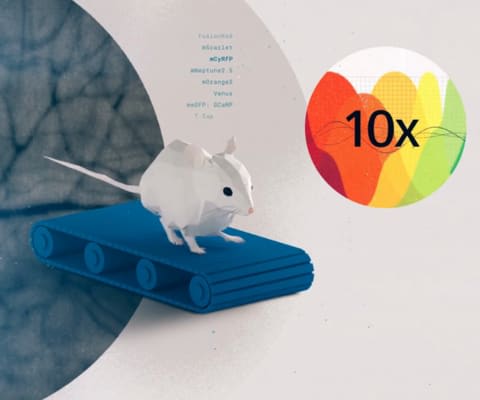
Explore how this workflow can expand circuit-level studies of behavior by moving beyond one- or two-color miniscope experiments.
DOWNLOAD OUR EVENT APP