

Environmental Research: From Forever Chemicals to Forever Solutions (Life Sciences)
Exploring Innovations and Solutions for a Healthier Planet
About the event
Explore the latest advancements and challenges in environmental toxicology. Discover innovative solutions designed to safeguard our environment and promote a healthier planet for future generations. Join us as we navigate the complexities of environmental toxicology and push the boundaries of scientific discovery.
Our KOL
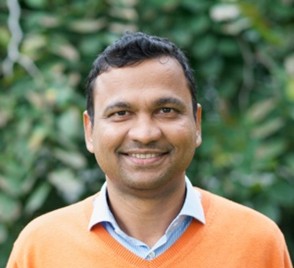
Kiran Patil
Professor of Molecular Systems Biology
University of Cambridge
Kiran studied Chemical Engineering at the Indian Institute of Technology (Mumbai, India). He moved to the Technical University of Denmark (DTU) to work with Prof. Jens Nielsen and obtained his PhD in Systems Biology. He was then appointed as Assistant Professor at DTU, where he worked on transcriptional regulation and metabolic engineering. In 2010, Kiran joined the Structural and Computational Biology Unit at the European Molecular Biology Laboratory (EMBL-Heidelberg, Germany). He was appointed Director of Research at the MRC Toxicology Unit (University of Cambridge) in 2019, and Professor of Molecular Systems Biology (Department of Biochemistry, University of Cambridge) in 2022.
March 4th, 2026 @ 11am-12pm EST | 4pm-5pm GMT
From pharmaceuticals to pollutants: how chemicals affect gut microbes
Human gut microbiota is exposed to thousands of xenobiotics, ranging from therapeutic drugs to chemical pollutants. Chemical pollutants are particularly concerning due to their prevalence in water and food sources. I will present my lab’s effort to understand impact of these chemicals on gut bacteria using systems and molecular approaches and discuss how mechanistic insights could help mitigating their negative impact.
Related references:
1. Lindell et al. Nature Microbiology (2025): https://doi.org/10.1038/s41564-025-02032-5
2. Roux, Lindell et al. Nature Microbiology (2025): https://doi.org/10.1038/s41564-025-02182-6
3. Klünemann et al. Nature (2021): https://doi.org/10.1038/s41586-021-03891-8